Français
(News)
News
Portrait

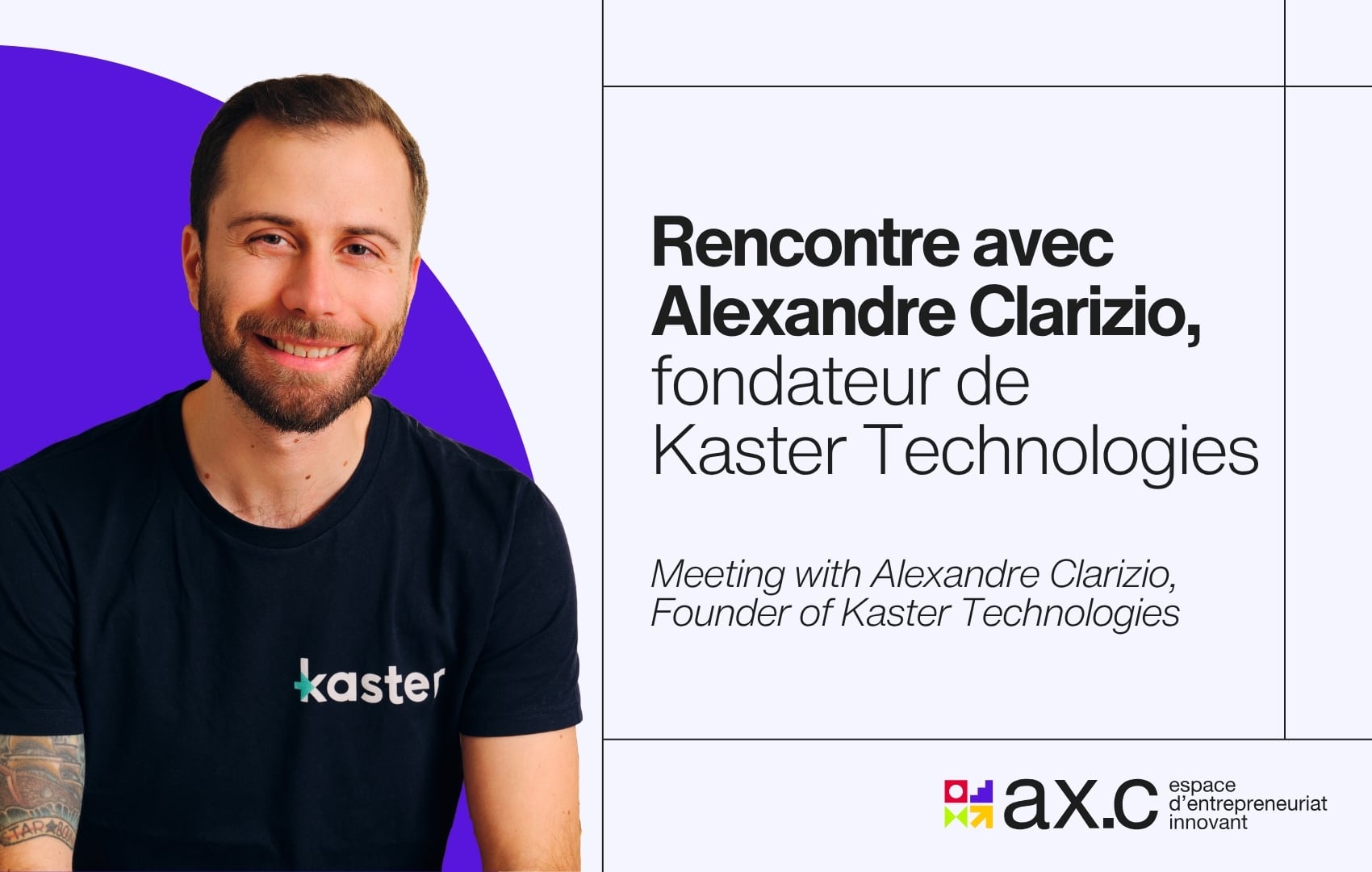
Portrait of an Entrepreneur: Alexandre Clarizio

In the pharmaceutical industry, some companies develop new medicines. Others tackle an equally critical challenge: making sure those medicines are available when they're needed most.

With Kaster Technologies, Alexandre Clarizio is leveraging his expertise in industrial engineering and optimization to address an issue affecting healthcare systems around the world: drug shortages.

His startup is developing a platform that helps pharmaceutical manufacturers optimize production and build a more efficient, resilient supply chain.

In this interview, Alexandre reflects on his entrepreneurial journey, from his early engineering career to the founding of Kaster Technologies. He shares the key lessons he's learned along the way and explains what motivates him every day to build a company with a tangible impact on access to essential medicines.

Let's Introduce Yourself

My name is Alexandre but my friends usually call me "Clari" as my name is Clarizio. I founded my startup Kaster because I wanted to solve the problem of drug shortages. As a child, I wanted to become an astronaut, and I was a huge fan of Star Wars. My favourite dish is orecchiette with rapini, and if you run into me on a Sunday, I'd probably be gardening or building something at my cottage. 

Entrepreneurial Journey

🎙️ Let’s go back a bit: what was your background before launching your startup?

I graduated in industrial engineering and started my career at Pelican, where I worked on manufacturing operations. That's where I realized what truly fascinated me: optimization and algorithms.

I then joined Urgences-santé, where I contributed to a project focused on optimizing the entire pre-hospital emergency service across Montreal and Laval.

After that, I began a master's degree at Polytechnique Montréal with one clear goal: to build a startup. Around the same time, drug shortages affected my own family. I started talking to several pharmaceutical companies to better understand the challenges they were facing, and one of Canada's largest pharmaceutical manufacturers opened its doors to support my research project.

That's where Kaster Technologies was truly born.

Before that, I had already launched two entrepreneurial projects. They were quickly invalidated, but they taught me a tremendous amount. Kaster Technologies is the third company I've founded and the first one to really take off.

Did you always know you wanted to become an entrepreneur?

Yes. My parents are entrepreneurs, so business was a common topic of conversation at home. Growing up in that environment, entrepreneurship felt natural.

My father is of Italian descent, and in his family, being your own boss was part of the culture. I was always encouraged to follow my passions and build something of my own.

When did you decide you were ready to take the leap?

I don't think you're ever completely ready. At some point, you just have to take the leap.

My first startup project began while I was still working at Urgences-santé. I worked on it evenings and weekends while participating in an incubator. That first experience helped me understand what a technology startup really is and gave me the foundation I needed to keep validating ideas until I found the right one.

Where does the name Kaster come from?

Originally, my first venture was in the video game industry. The name came from the English word caster, like a spell caster.

When I pivoted to an entirely different industry, I decided to keep the name.

Today, it has taken on a new meaning. Our technology helps make the pharmaceutical supply chain more resilient, much like a cast helps a broken bone heal. The name has evolved along with the company while still feeling true to its origins.

Did you go through an incubator? What did it bring you?

My first incubator was DataPreneur. It gave me the fundamentals of value proposition, business models, and how a startup is structured.

I later joined Centech, which was a turning point for me. It taught me how to validate ideas faster, build the right connections, and gave me strong credibility within Québec's startup ecosystem.

More recently, I participated in the Creative Destruction Lab. That experience gave us access to outstanding mentors, introduced us to our Toronto-based venture capital investors, and led to a strategic partnership with OPTEL, which strongly believes in our technology.

What's the best advice you've ever received?

Validate your idea before building anything. It's advice I still follow today.

If you had to give advice to an entrepreneur?

Exactly the same.

I see many entrepreneurs jump straight into product development without first taking the time to fully understand the problem they're trying to solve. Validating an idea early can save an enormous amount of time, money, and energy.

Building Kaster

At what point did your idea become tangible?

There were two key moments.

The first was when I sketched the first mathematical models on paper. That's when I thought, "This is the starting point."

The second was signing our first major contract with our research partner, who later became our first commercial customer.

Where do you see Kaster in 5 years?

I see Kaster Technologies operating internationally.

Our ambition is to become a global leader in our field. India, in particular, is a strategic market for us because it's one of the world's largest producers of generic medicines.

Our goal is to become the go-to solution for making pharmaceutical supply chains more efficient and resilient.

What do you need most right now?

We're at a pivotal stage.

Our platform is progressing well, our team is strong, and we've built a solid company culture. Our biggest challenge today is time, because sales cycles in the pharmaceutical industry are exceptionally long.

As deployments accelerate, we'll need additional talent and likely more capital to support our growth.

If you could meet one person who could change everything?

I'd love to meet leaders who have already built global technology companies.

People like Matt Mochary, who coaches many CEOs, or founders who have successfully scaled technology companies internationally. Learning from their experience and their approach to managing growth would be incredibly valuable.

Behind the Entrepreneur

Looking back, what are you most proud of today?

My greatest source of pride is seeing my team grow together and truly take ownership of what we're building.

Today, everyone owns their area of expertise and delivers work that's far better than anything I could accomplish on my own.

Another incredibly rewarding moment is hearing our customers present our solution at conferences and explain the impact it has had on the way they work. That's when you realize you're creating real value.

And personally, what are you most proud of?

I'm proud that I took the leap.

For a long time, I hesitated before starting. I imagined every possible scenario. Looking back, I'm proud that I made the decision and even more proud that I kept going.

Like every entrepreneur, there are moments when I think life could have been easier if I'd chosen a different path. But I still wake up every morning with the same motivation. That perseverance is probably what I'm proudest of.

And on the other hand, what has been the most challenging?

I set very high expectations for myself.

I always want to do more, and I sometimes struggle with moments when the best thing to do is simply wait. Between meetings, if nothing is urgent, my mind immediately tells me I should be working on something else.

Over time, I've realized that pace can lead to burnout if you're not careful. That's why I believe it's essential to surround yourself with the right people, your family, your community, and professionals who can support you.

Is there a phrase or mantra that guides you?

Yes: Believe.

It's a word my wife and I often come back to during difficult times. I simply remind myself to keep believing in the project and not give up.

I often think about Ted Lasso and its famous "Believe" sign. It's an image that comes back to me often and helps me keep going.

Is there someone who has made a real difference in your journey?

It starts with my parents, my wife, and my children.

Professionally, Louis-Martin Rousseau, who supervised my master's research, played a pivotal role. He was one of the first people to believe in the project. After I finished my master's, he asked me how much I needed to get started, and became our first external investor.

Those first believers often make all the difference.

Was there a meeting or synergy at Ax.c that had a concrete impact?

More than any single connection, it's the community itself that makes the biggest difference.

Being surrounded every day by other founders makes it easy to exchange ideas, share experiences, and learn from one another. That kind of proximity is hard to find elsewhere.

I've also built great relationships with Sleiman from Josephine Care and Elisabeth from BetaLab. We've known each other since Centech and still regularly exchange ideas. Those conversations are always valuable.

Finally: what motivates you to get up in the morning?

My team. And the problem we're trying to solve.

That's what keeps me moving forward every single day.

One last word?

If this interview inspires even one person to take the leap into entrepreneurship, I'll be very happy.

I enjoy sharing my experience with people who want to start a company. I regularly speak with students at Concordia and Polytechnique Montréal, and I'm always happy to connect on LinkedIn to answer questions, share advice, or simply talk about the day-to-day realities of entrepreneurship.

Discover Kaster

Suggested articles

View all news
Portrait of an Entrepreneur: Nanette Sene
Portrait

Portrait of an Entrepreneur: Nanette Sene

Portrait of an Entrepreneur: François Daoust
Portrait

Portrait of an Entrepreneur: François Daoust

Portrait of an Entrepreneur: Sleiman Chahwan
Portrait

Portrait of an Entrepreneur: Sleiman Chahwan

View all news

Your privacy is important to us. By using this site, you agree to data tracking as described in our Privacy Policy.

Necessary data

The tracking of certain data is required for the operation of the website and therefore cannot be deactivated: choice of language, consent and preference on data tracking, etc.

Mandatory
Optional data

In return, the tracking of certain data is optional and requires your consent: collect statistics on traffic, analyze visitors’ journeys to improve the functioning of the website, offer personalized offers, etc.